

- 13 Views
- 8 Min Read
- (0) Comment
From the Red City to the golden dunes — in just three days.
So, you’re thinking about a 3-day desert tour from Marrakech. Good choice. It’s one of the most popular trips in Morocco, and for good reason.
But before you book, you probably have questions. How much does it cost? What’s the itinerary really like? Is it worth the long drive?
This guide answers all of that. We’ll walk you through the full 2026 itinerary, real prices, what’s included, and a few honest tips. By the end, you’ll know exactly what to expect.
Here’s the short version: in three days, you’ll cross the High Atlas Mountains, walk through a UNESCO kasbah, and sleep under more stars than you’ve probably ever seen. Then you’ll ride a camel into the Sahara at sunset. It’s a lot to fit into 72 hours. But thousands of travelers do it every year, and most say the same thing: it’s worth it.
What’s Included in a 3-Day Desert Tour from Marrakech?
First, let’s clear something up. Not all “3-day desert tours” are the same.
They follow a similar route. Marrakech, Aït Ben Haddou, the Dadès Valley, Todra Gorge, and finally Merzouga. But the experience can be very different depending on which type you book.
Private 4×4 or Shared Minibus?
There are two main options.
Group tours. You share a minibus with other travelers. It’s the cheapest way to do the trip, and honestly, it’s a fun, social option too.
Private tours. You get your own 4×4 and driver-guide. The itinerary is flexible. Want to stay longer at a viewpoint? No problem. Want to skip a stop? Just say so.
Neither option is “better.” It really depends on your budget and how you like to travel.
Hotels and Desert Camps
Good news: both tour types include the same accommodation.
- Night 1: a kasbah-style hotel in the Dadès Valley. Real bed, dinner and breakfast included.
- Night 2: a Berber desert camp in Erg Chebbi. Dinner under the stars, and live drumming around the fire.
If you want extra comfort, most operators also offer a luxury camp upgrade. Think a private glamping tent with an en-suite bathroom, instead of the standard shared setup.
What’s Actually Included
Across both tour types, you’ll typically get:
- Breakfast and dinner for both nights
- A sunset camel trek, plus a sunrise ride back
- Sandboarding on the dunes (if available)
- A guided visit of Aït Ben Haddou
- Live Berber music by the campfire
One thing to note: lunch usually isn’t included. Budget around €12–14 per day. This actually works in your favor, since it lets you stop wherever looks good along the way.
The Full 3-Day Itinerary
Day 1: Marrakech to the Dadès Valley
Your driver picks you up around 7:00 AM. Within the first hour, you’re already climbing into the High Atlas Mountains. So, keep your camera close. You won’t want to miss this part.
The Tizi n’Tichka Pass
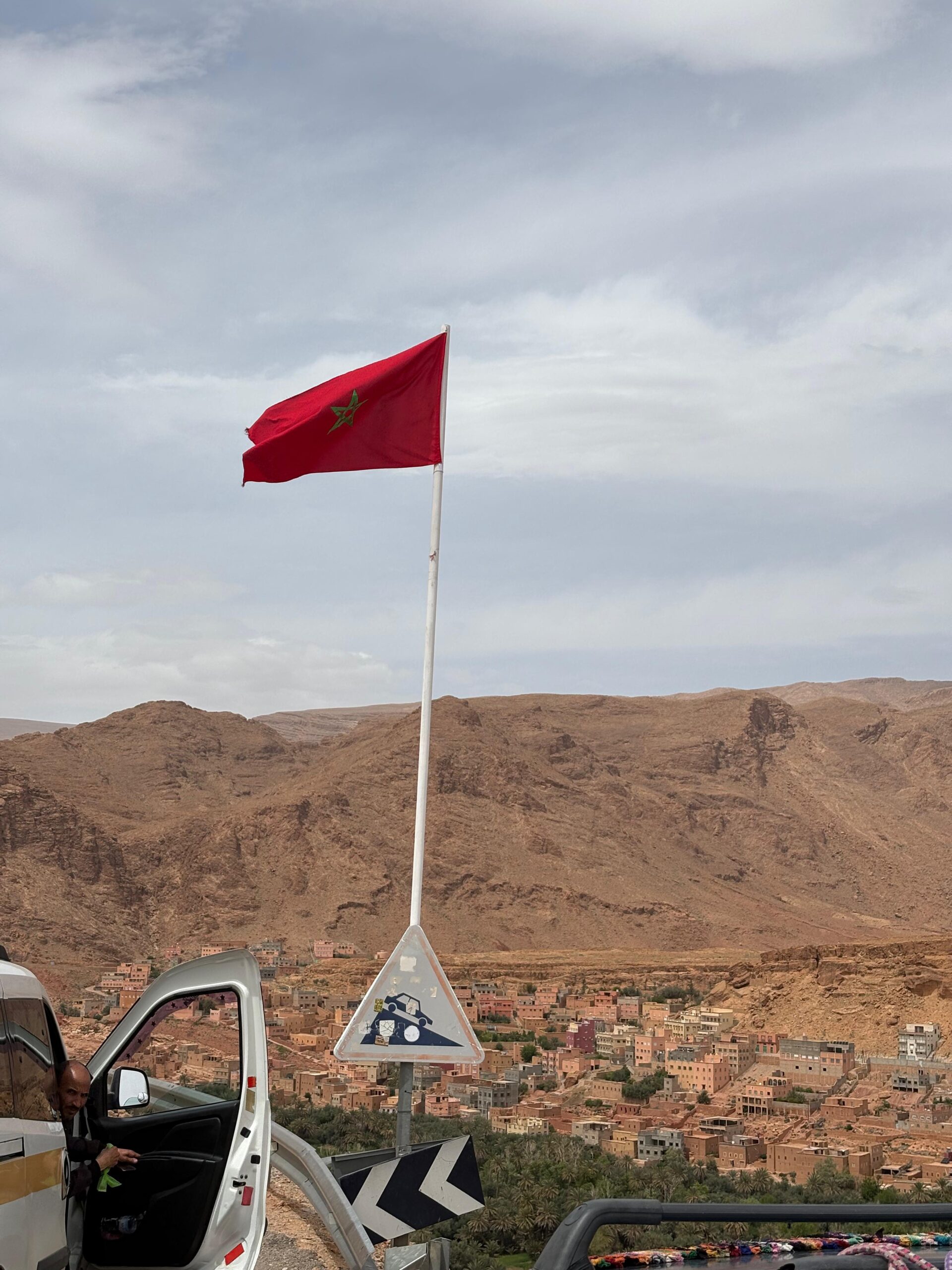
At 2,260 meters, this is the highest paved mountain pass in North Africa. Most drivers stop at the summit so you can step out, breathe the mountain air, and take in the view. Then, the road drops into a completely different landscape: red earth, scattered villages, wide open sky.
Aït Ben Haddou
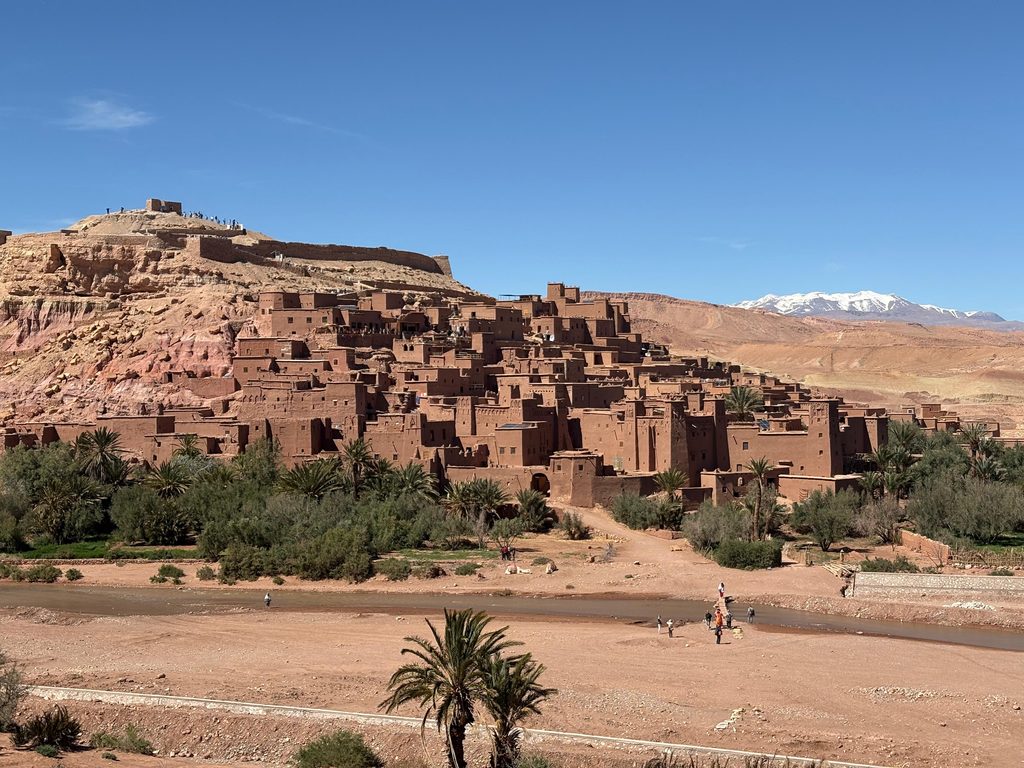
By mid-morning, you reach this UNESCO World Heritage kasbah. It rises straight out of the valley floor, and honestly, photos don’t do it justice. A local guide walks you through the old ramparts. Afterward, if your legs are up for it, climb to the hilltop viewpoint. It’s steep, but the view is worth it.
After lunch (on your own budget), you’ll pass through Ouarzazate, Morocco’s film capital, then head into the fragrant Rose Valley. By evening, you’ll arrive in the Dadès Valley. Dinner and a proper bed await at your kasbah hotel.
Day 2: Onward to Merzouga
After breakfast, you’ll head to Todra Gorge. The limestone walls rise 300 meters on both sides. Even if you’ve seen the photos, the real thing is still surprising.
From there, things quiet down fast. Towns get smaller. The road opens up. Eventually, you’ll pass through Erfoud, the gateway to the Sahara.
The Camel Trek
By late afternoon, the dunes of Erg Chebbi appear on the horizon. This is the moment most people book the tour for.
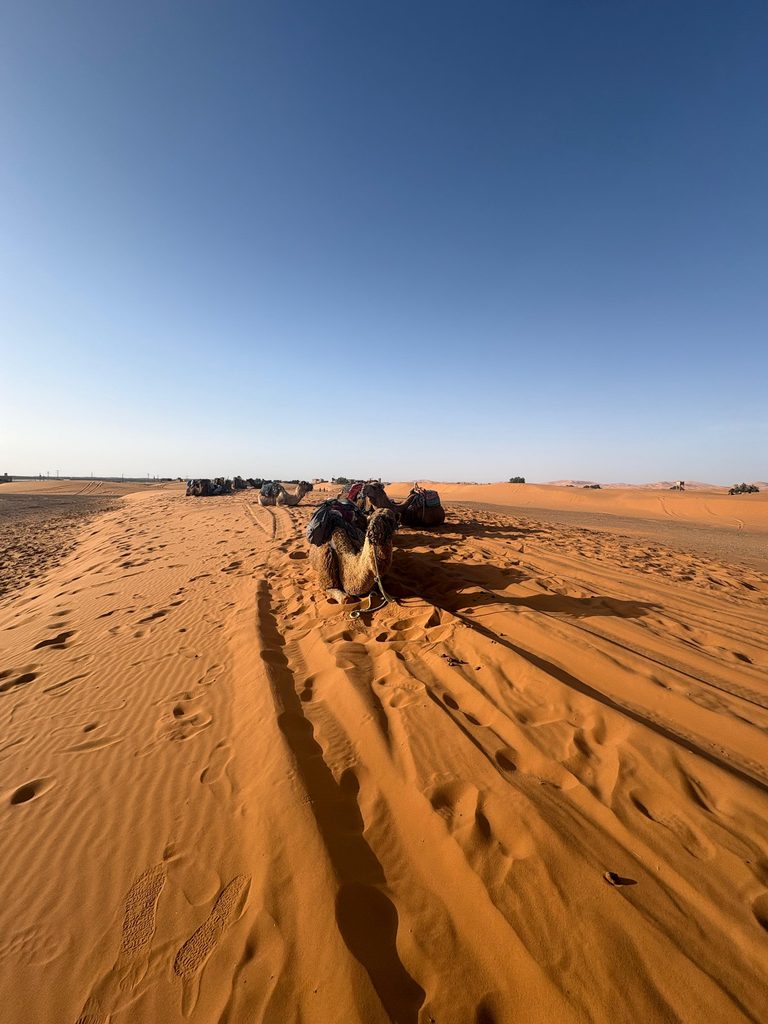
You’ll leave your main bag at the auberge and pack light for the night. Then, as the sun starts to drop, you’ll climb onto a camel. The trek takes about an hour, and the dunes shift color as you ride: gold, then amber, then deep red. By the time you reach camp, it’s almost completely silent.
A Night in the Desert
Dinner is served under an open sky, with zero light pollution. There’s live drumming around the fire. And above you? More stars than you’ve probably ever seen in one place.
Day 3: Sunrise and the Long Way Home
Someone will wake you before dawn. Don’t ignore them.
Climbing a dune in the dark, then watching the sky shift from black to purple to burning orange, is one of those moments people remember for years.
After sunrise, you’ll ride back to camp for breakfast and a shower. Then comes the long drive home, through the Draa Valley and back over the Atlas Mountains. Most tours arrive back in Marrakech around 7:30–8:00 PM.
Yes, it’s a long day. About 8–9 hours of driving. But by this point, you’ll probably agree: it was worth it.
How Much Does It Cost? (2026 Prices)
Prices depend mainly on one thing: private or group.
Group tours start around €89 per person. You’ll share a minibus, but you’ll also save a lot of money — and probably make a few travel friends along the way.
Private tours start around €350 per person. You get your own vehicle, your own pace, and no strangers in the car. For couples or families, this is usually the better fit.
Want extra comfort? A luxury camp upgrade typically costs around €30 extra per person. And if you’re up for a bit of adventure, quad biking in the dunes runs about €45–49, paid on the spot.
When’s the Best Time to Go?
Spring (March–May) — Warm days, cool nights. Bonus: the Rose Valley is in bloom.
Autumn (September–November) — Similar to spring. Clear skies, comfortable temperatures, great for stargazing.
Winter (December–February) — Pleasant during the day, but nights can drop close to 0°C. Pack warm layers if you’re going this time of year.
Summer (June–August) — Hot. Really hot. We’re talking over 40°C during the day. Still doable, but not for everyone.
If you want the sweet spot, aim for spring or autumn. You’ll get warm days and manageable nights, without the extreme heat.
What to Pack
For daytime, keep it simple:
- Sunglasses and a hat
- Sunscreen (yes, even in winter)
- Closed shoes or sandals that can handle sand
- A light scarf for the camel ride
For nighttime, add:
- A warm layer, since desert nights get cold
- Your own towel (camps don’t always provide one)
- A small overnight bag, since your main luggage stays behind at the auberge
Group Tour or Private Tour? How to Decide
Still not sure which one to pick? Here’s a simple way to think about it.
Go with a group tour if you’re traveling on a budget, traveling solo, or don’t mind a fixed schedule.
Go with a private tour if you’re traveling as a couple or family, or if you’d simply rather set your own pace.
Either way, before you book, ask a few quick questions:
- Does the driver-guide speak English fluently?
- What’s actually included in the price?
- What’s the cancellation policy?
- Is a luxury camp upgrade available?
Frequently Asked Questions
Is 3 days enough for the Marrakech desert tour?
Yes. In fact, it’s the minimum amount of time needed to reach Merzouga and get a full night in the dunes. Anything shorter, and you’d spend most of your time driving.
How much does a 3-day desert tour from Marrakech cost?
Group tours start around €89 per person. Private tours start around €350 per person, depending on the season and group size.
Is it safe to travel to the Sahara desert?
Yes. This is one of the most established tourist routes in Morocco. Local operators run it daily, with experienced, licensed guides.
Can I do this tour with kids?
Absolutely. Many families do this trip. A private tour gives you more flexibility to adjust the pace for children.
Is there really that much driving?
Yes, and it’s better to know that upfront. Day 1 is around 5–6 hours. Day 2 is shorter, around 3–4 hours. Day 3 is the longest, at roughly 8–9 hours back to Marrakech. That said, the scenery keeps changing, so it never feels dull.
Ready to Book Your Desert Tour?
So, which one sounds like your trip?
If you want flexibility and your own pace, go with the private 3-day desert tour from Marrakech.
If you’re after value and good company, try the group desert tour from Marrakech.
Either way, you’ll end up in the same place: standing on top of a dune at sunrise, watching the Sahara turn gold, wondering why you didn’t book this sooner.
And if you’d rather end your trip in a different city, check out the 3-day desert tour from Marrakech to Fes instead. Same Sahara, just a one-way route.
Leave a comment:
You must be logged in to post a comment.