
- 77 Views
- 12 Min Read
- (0) Comment
Planning money in Morocco starts with the dirham, abbreviated MAD or DH. Carry cash for taxis, souks and small purchases, and use a card where the merchant accepts it. For an ATM withdrawal, check three separate costs: the machine's local fee, your card issuer's fee and any offered currency conversion. Choosing a charge in MAD usually avoids the ATM or merchant's home-currency conversion, but it does not remove the other fees.
Quick answer
Currency: Moroccan dirhams, MAD or DH. Use the amount and fees shown for the actual transaction rather than a rounded guidebook conversion.
Before booking, ask Marrakech First to confirm your tour total, payment currency, deposit and remaining balance. Keep that written confirmation alongside your booking so you can plan the cash you actually need.
ATM limits differ by machine, bank and card issuer; the amount offered on the screen is not a national withdrawal entitlement.
Cash is needed in souks, taxis and villages; cards work in hotels, supermarkets and malls.
Taking dirhams out: up to MAD 2,000 per traveller in banknotes.
In this guide
Money in Morocco: The Dirham Explained
Bank Al-Maghrib issues the Moroccan dirham: 1 dirham equals 100 centimes. You will commonly use MAD 20, 50, 100 and 200 notes and smaller coins. Some informal prices may be expressed in rials rather than dirhams; ask for the amount in MAD before paying. When handling money in Morocco, keeping small notes is usually more useful than memorising every coin design.
Money in Morocco: Paying in Euros or Dollars
Euros are often accepted informally in tourist places (some riads, tour operators, souvenir shops and desert camps), usually at a rounded rate that favours the seller.
US dollars are accepted in fewer places.
Everyday life runs on dirhams: taxis, cafés, markets, street food and entrance fees. Ask for the price in dirhams and compare the final amount before accepting a euro or dollar quote.
Money in Morocco: Exchange Rates and Conversions
| Compare this | What to calculate |
|---|---|
| Exchange-office offer | How many dirhams you receive after any commission |
| ATM withdrawal | MAD received plus machine fee, issuer fee and any conversion |
| Card purchase | The MAD charge and your issuer's foreign-payment terms |
| Worked example, not a live rate | If €100 yields MAD 1,070 at one desk and MAD 1,090 at another, the difference is MAD 20 before other fees |
For current reference rates, use Bank Al-Maghrib; for the amount you will actually receive, use the bank or exchange office's offered rate and fees. Those are different numbers.
Do the comparison on the amount you plan to change. A better advertised rate is not necessarily a better final deal if commission is added. Keep the receipt, particularly if you may need to exchange unused dirhams before departure.
Check the rate before you travel: – XE Currency Converter, also as an app that works offline – Wise Currency Converter, with the mid-market rate – Bank Al-Maghrib, Morocco's central bank – Google: type "100 EUR to MAD"
Compare the rate on an exchange office board with the mid-market rate: a small gap is normal, a big gap means look elsewhere.
Where to Get Moroccan Dirhams: ATMs in Morocco and Exchange Offices
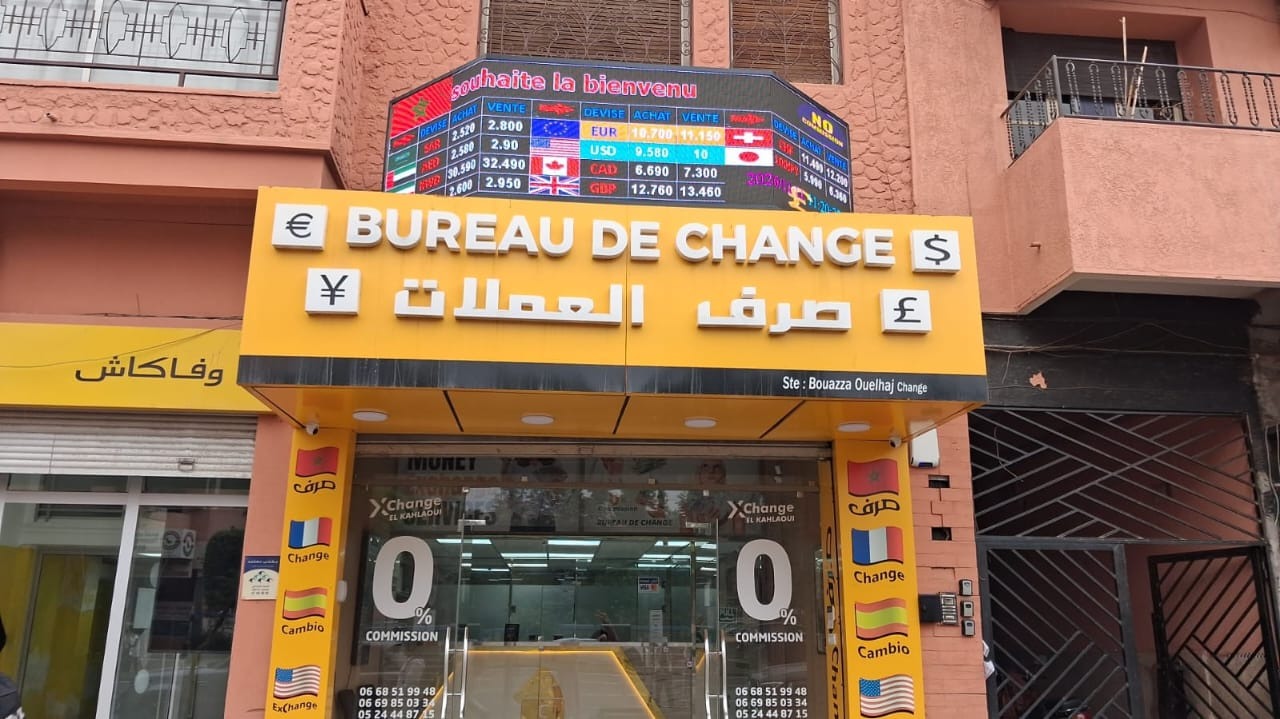
Exchange offices (bureaux de change): licensed offices in all major cities and many towns, often open later than banks and at weekends, with rates on a board and a receipt for every transaction.
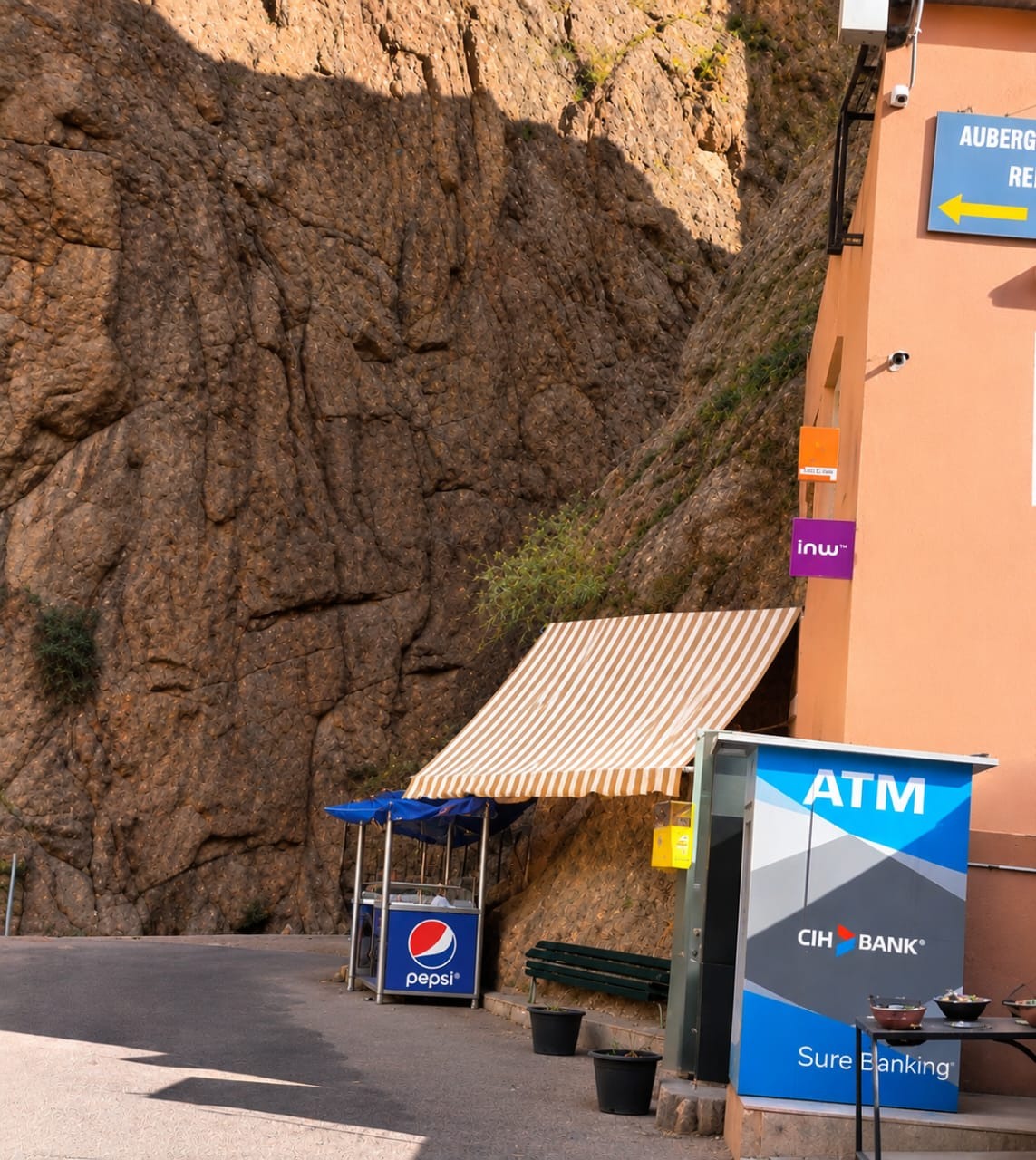
Use an established bank branch or licensed exchange office. For an ATM, a location attached to a bank can make follow-up easier if the card is retained. Bank names and branding can change; the useful check is the actual machine, its displayed costs and the issuer's support contact.
Visa and Mastercard are widely used, but acceptance depends on the actual machine and your card. Read the withdrawal amount, local fee and conversion choice before accepting. A credit-card cash withdrawal may carry additional issuer charges. If your card fails, do not repeatedly try the same transaction without checking the message and your bank app.
Airport: fine for a small amount on arrival.
Hotels: possible, but usually the least favourable rate.
Tip: bring clean notes; torn or very old bills may be refused.
Cash or Card? Money in Morocco Place by Place
| Where | How to pay |
|---|---|
| Hanout (corner shop): water, snacks, phone credit | Cash only in most of them |
| Supermarkets: Marjane, Carrefour, Aswak Assalam, many BIM stores | Card (TPE) or cash |
| Malls | Card |
| Hotels and mid/upscale restaurants | Card usually accepted |
| Riads and guesthouses | Cash or card; some prefer cash or online payment |
| Souks and medina shops | Mostly cash |
| Street food, cafés, juice stalls | Cash |
| Petit and grand taxis | Cash |
| ONCF trains | Card (online, app or station) or cash |
| CTM and Supratours buses | Card (online or station) or cash |
| Marrakech First tours, transfers, hotels and events | Online payment when booking, or cash |
| Museums and monuments | Mostly cash; some (like Majorelle) online by card only |
| Desert camps and villages | Cash for drinks, extras and tips |
If you want your card issuer to handle conversion, select a MAD charge and decline the machine or merchant's offered home-currency conversion. Read the final screen: declining conversion is different from cancelling the cash withdrawal, and separate local fees may remain.
Your Arrival Plan for Money in Morocco
1. Bring a backup of €100-200 or $100-200 in clean notes. 2. Withdraw or change a small amount at the airport for the taxi and first meal.
3. Download an offline currency converter. 4. Break big notes in supermarkets or hotels, and keep 10s and 20s for taxis and tips. 5. Keep an emergency reserve of about MAD 200 separate from your wallet.
Money in Morocco: Withdrawals and Transfers
1. Withdrawing money from your own bank account. This is what most travellers do: use an ATM with your Visa or Mastercard debit or credit card (see "Where to Get Dirhams" above).
For emergency money from abroad, an established transfer provider may allow cash collection with identity documents. The sender and recipient should check the exact pickup network, fees, required name and reference directly with the provider. Do not rely on a travel article's old branch count or assume every agent can release every transfer.
Sending funds out of Morocco is a different transaction from withdrawing your own money at an ATM. Exchange-control eligibility, documents and limits depend on the person and purpose. Ask the authorised provider or Office des Changes about your case before relying on an international transfer.
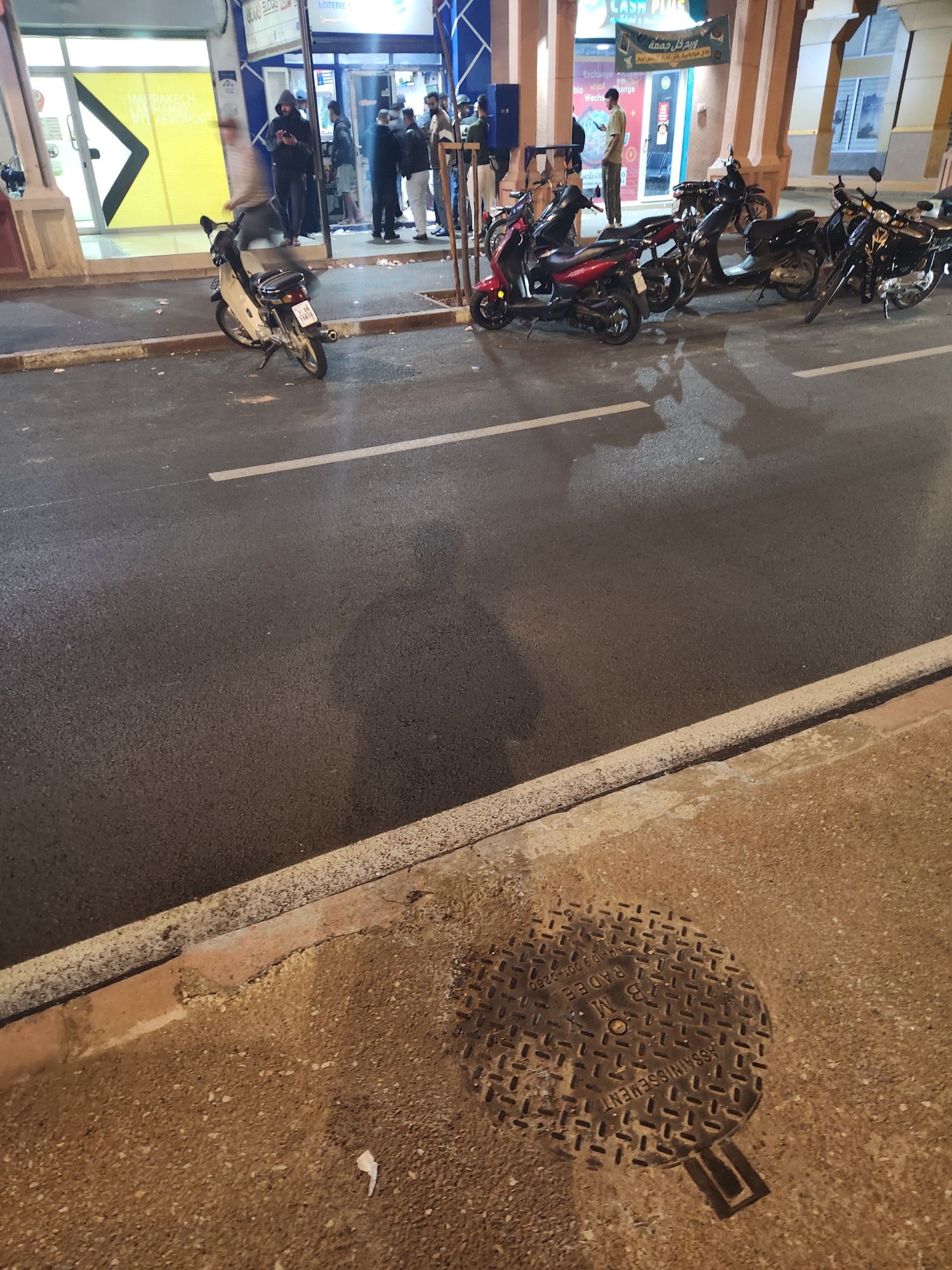
Money in Morocco: Border and Currency Rules
The Office des Changes 2026 instruction, section 3.2, permits travellers to carry no more than MAD 2,000 in Moroccan banknotes out of or into the country. This exception is separate from foreign-currency rules. Foreign-currency cash and covered bearer instruments worth MAD 100,000 or more require customs declaration on entry and exit; supporting-document requirements also apply to re-exporting previously imported funds. Keep exchange receipts and any import declaration. For money in Morocco left at the end of the holiday, ask an authorised exchange office about reconversion before reaching departure formalities. Check the official instruction and customs for your situation, particularly if residency or a large amount is involved.
A Lost Card, a Failed Withdrawal or No Cash
Card lost or stolen: call your bank's 24/7 number on the back of the card (save it in your phone before the trip) or freeze the card in your banking app.
Card swallowed by an ATM: go to that bank's branch with your passport during opening hours.
Wallet stolen: report it at the nearest police station (in Marrakech, there is a tourist police post on Jemaa el-Fnaa) and ask for a written report for your insurance.
Out of cash: have money sent through a transfer agency.
Card refused: your bank may have blocked it for "unusual activity"; call them or approve the payment in your app.
Money in Morocco: Traps to Avoid
"No change": carry small notes, and say the note out loud when you pay ("here is 200") to avoid wrong-change tricks. Card surcharges: some shops add a few percent for card payments; ask first. Street money changers: always use official exchange offices and keep your receipt. Unclear prices: agree on the price in dirhams before any service. Fake helpers at ATMs: never accept help from strangers. Rounded euro prices: paying in euros often costs more.
Money in Morocco: Tipping without Confusion
Tipping in Morocco (pourboire) is part of daily life. The figures below are suggestions, not compulsory charges. Shared-tour contributions per traveller are different from tips for a private driver serving one group.
| Situation | Typical tip |
|---|---|
| Café | MAD 2-5 |
| Restaurant | About 10% in sit-down restaurants |
| Porter | MAD 10-20 |
| Riad housekeeping | MAD 20-50 for the stay |
| Taxi | Round up |
| Local guide | MAD 50-100 half day / MAD 100-200 full day (per group) |
| Private driver | MAD 100-200 a day (per group, private tour) |
| Driver-guide and camp team, 3-day shared tour | MAD 50-100 per traveller in total, for the whole trip |
| Hammam attendant | MAD 20-50 |
| Toilet attendants, parking guardians | MAD 2-5 |
Plan accommodation, meals, sightseeing and transport separately from your cash-withdrawal allowance; a bank fee is only one part of the daily travel cost.
Money in Morocco: How Much Cash to Carry
Build your cash allowance from unpaid expenses. A city day with street food, taxis and several entries might use MAD 300-500, while a prepaid stay can need less. For the shared-desert example, allow roughly MAD 600-900 for lunches, drinks and suggested tips, then add chosen extras and any unpaid balance. These are example spending allowances, not required withdrawals. Replenish before remote road legs and keep smaller notes available.
Money in Morocco: A Cash Allowance You Can Calculate
Separate money already paid from money still needed. For a prepaid city stay, cash might cover three meals, two taxis and a monument entry. For a shared desert tour, the unpaid list may instead be lunches, drinks, optional guiding, tips and souvenirs. Do not withdraw the hotel cost again just because it appears in your overall travel budget.
For example, start a three-day road trip with an envelope for lunches and drinks, another small reserve for voluntary tips, and a separate amount for any chosen activity. The MAD 600-900 road-trip allowance above is a planning range for those ordinary extras, not a requirement and not an unpaid tour balance. Managing money in Morocco is easier when the optional quad or upgrade cannot accidentally consume the lunch cash.
Money in Morocco: Three Different ATM Costs
Imagine withdrawing MAD 2,000 from a machine displaying a MAD 50 fee. That example would put MAD 2,000 in your hand but add the local surcharge to the transaction; your issuer could still add its own fee. A separate offer to convert the transaction into euros or dollars is another decision. The MAD 50 is an illustration of the arithmetic, not a fee quoted for a named Moroccan bank.
When managing money in Morocco, read the amount, local charge and currency choice separately. Visa explains that an offered home-currency conversion should show its rate and any markup and remain your choice. Declining that conversion does not remove the other fees or prevent an international withdrawal. Your card issuer's own terms decide how its part is charged.
At the Machine: Read, Withdraw, Then Put the Cash Away
Use a location you are comfortable with, shield the PIN and refuse help from strangers. Select the amount in MAD. Read the surcharge and any conversion offer before continuing. Take the card, cash and useful receipt, then put them away before walking off. If no cash appears but the account shows a debit, record the machine location, time and message and contact your issuer; do not repeat the same large withdrawal several times.
Keep a backup card or cash reserve away from the main wallet. Save the bank's official contact before travel so you do not have to search while standing beside a failed machine. These are simple preparations for money in Morocco, whether the trip is a short Marrakech break or a multi-day road journey.
When paying a tour balance, use the currency and amount in the confirmation. A guide's rough exchange example is not a new conversion rule for that booking. Keep the receipt and distinguish a voluntary tip from a required payment. Marrakech First can state the balance and exclusions for the selected service before departure.
Plan Your Money in Morocco Before You Fly
Before departure, read your Marrakech First booking confirmation for the balance currency, payment method and exclusions. For a shared desert tour, confirm which lunches, drinks and optional extras fall outside the base price. Ask about your own booking rather than assuming online payment, cash or a particular currency is accepted for every service. The cancellation page explains the direct-booking terms.
FAQ: Money in Morocco
Can I pay in euros in Morocco?
Some tourism businesses accept them, but many everyday purchases need dirhams. Compare the agreed amount and rate first; a euro price is not automatically worse or better than a MAD price.
Is it better to bring cash or use ATMs in Morocco?
ATMs are usually the easiest option. Bring some euros or dollars as a backup.
Do cards work in Morocco?
Many hotels, supermarkets and restaurants accept them. Smaller shops, taxis, villages and some guesthouses may need cash. Check acceptance and any surcharge before ordering or relying on a card for an unpaid balance.
How much is tipping in Morocco for guides, drivers and restaurants?
Round up in cafés, about 10% in restaurants, and MAD 100-200 a day for a guide or driver per group.
How much can I withdraw from ATMs in Morocco?
The machine and your issuer set the applicable limits. Check the available amount and fees on screen; if you need several withdrawals, include any repeated fixed charges in the comparison.
Can I take Moroccan dirhams out of Morocco?
The 2026 Office des Changes instruction permits travellers to carry up to MAD 2,000 in Moroccan banknotes. Foreign-currency cash has separate declaration and documentation rules. Check current official guidance before departure.