
- 93 Views
- 12 Min Read
- (0) Comment
Fes to Merzouga is roughly a 470 km road journey, depending on the starting address, approach and camp meeting point. Allow about 7-8 hours of driving and longer for lunch and sightseeing; a full day with selected stops can take 9-10 hours or more. The road links the Middle Atlas, Midelt and the Ziz Valley before the Erg Chebbi dunes. Set departure by your confirmed camp meeting time, not by a generic promise to see every stop on the way.
Quick answer
Stops worth the time: Ifrane, the Azrou cedar forest, lunch in Midelt, the Ziz Gorges and the Ziz Valley viewpoint.
Winter: snow is possible around Ifrane and the Col du Zad; leave earlier or split the drive in Midelt.
Cash and fuel: Errachidia is a good place to stop for both.
Departure time: work back from the time confirmed by your camp.
In this guide
Best Stops from Fes to Merzouga, in Order
| Stop | What you see | Time to stay |
|---|---|---|
| Immouzzer Kandar (optional) | Mountain town above the Saïss plain, orchards and springs | Photo stop |
| Ifrane | "Morocco's Switzerland": red-roofed chalets, gardens, the stone lion statue; snow possible in winter | 20-30 min |
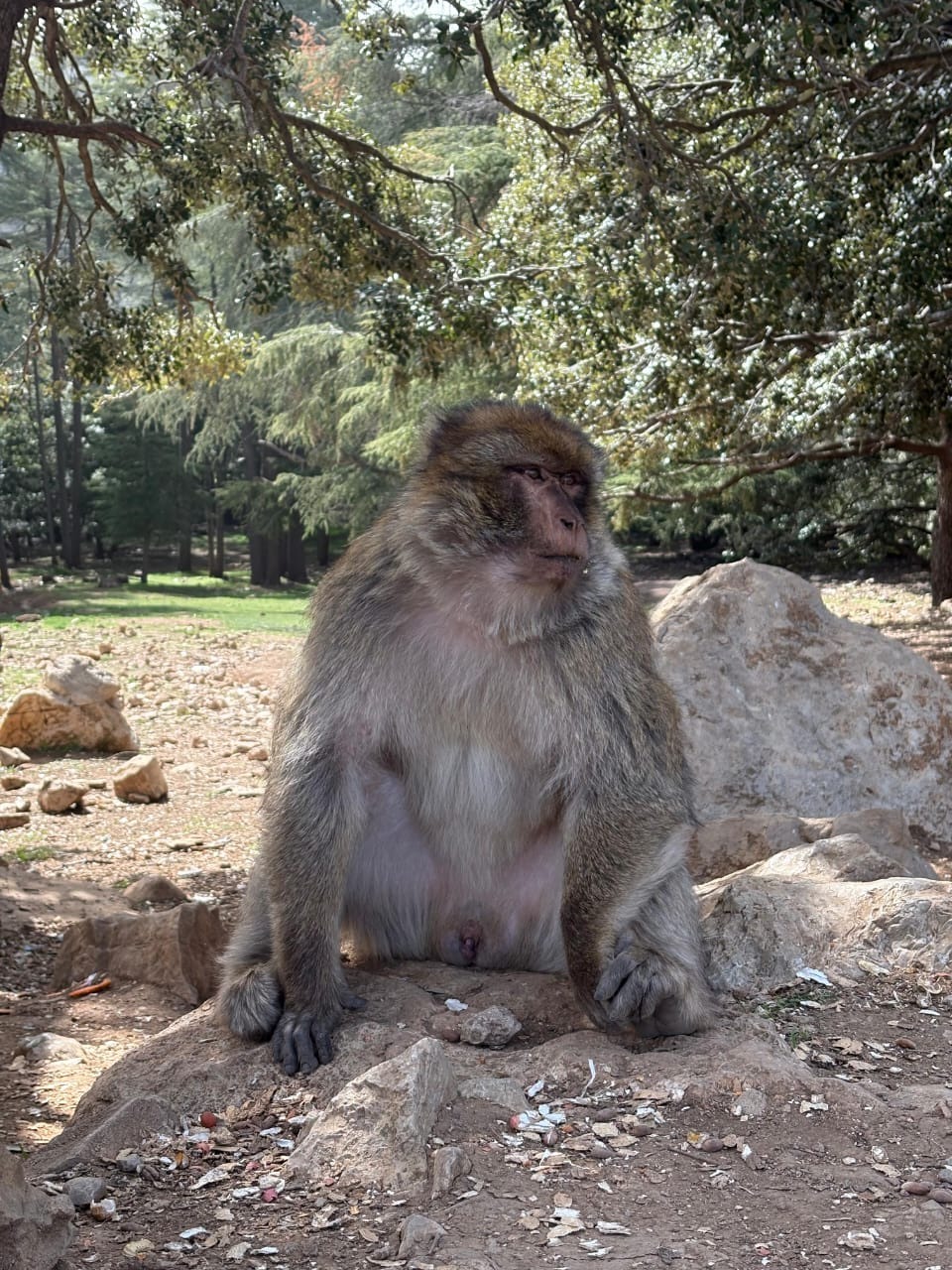
| Azrou cedar forest | Giant Atlas cedars and wild Barbary macaques along the road | 30-45 min |
| Timahdite plateaus | Open steppe, nomad tents and sheep herds | Photo stops |
| Col du Zad (around 2,200 m) | High Middle Atlas pass on the approach toward Midelt; winter conditions vary | Short stop |
| Midelt | "The apple capital" below Jbel Ayachi (3,700+ m); the classic lunch stop | 45-60 min |
| Tunnel du Légionnaire and the Ziz Gorges | A tunnel through the rock, then red canyons and river bends | Photo stops |
| Hassan Addakhil dam lake | A turquoise lake in the desert near Errachidia | Photo stop |
| Errachidia | Regional capital and gateway to the Tafilalt; a good place for ATMs and fuel | Short stop |
| Ziz Valley viewpoint (south of Errachidia, towards Aoufous) | A green river of palm trees between red cliffs, with old ksour | 15-20 min |
| Erfoud | Fossil capital, with workshops polishing fossil marble; date festival in October | 20-30 min (optional) |
| Rissani | Historic capital of the Tafilalt; big market on Tuesday, Thursday and Sunday | 20-30 min (optional) |
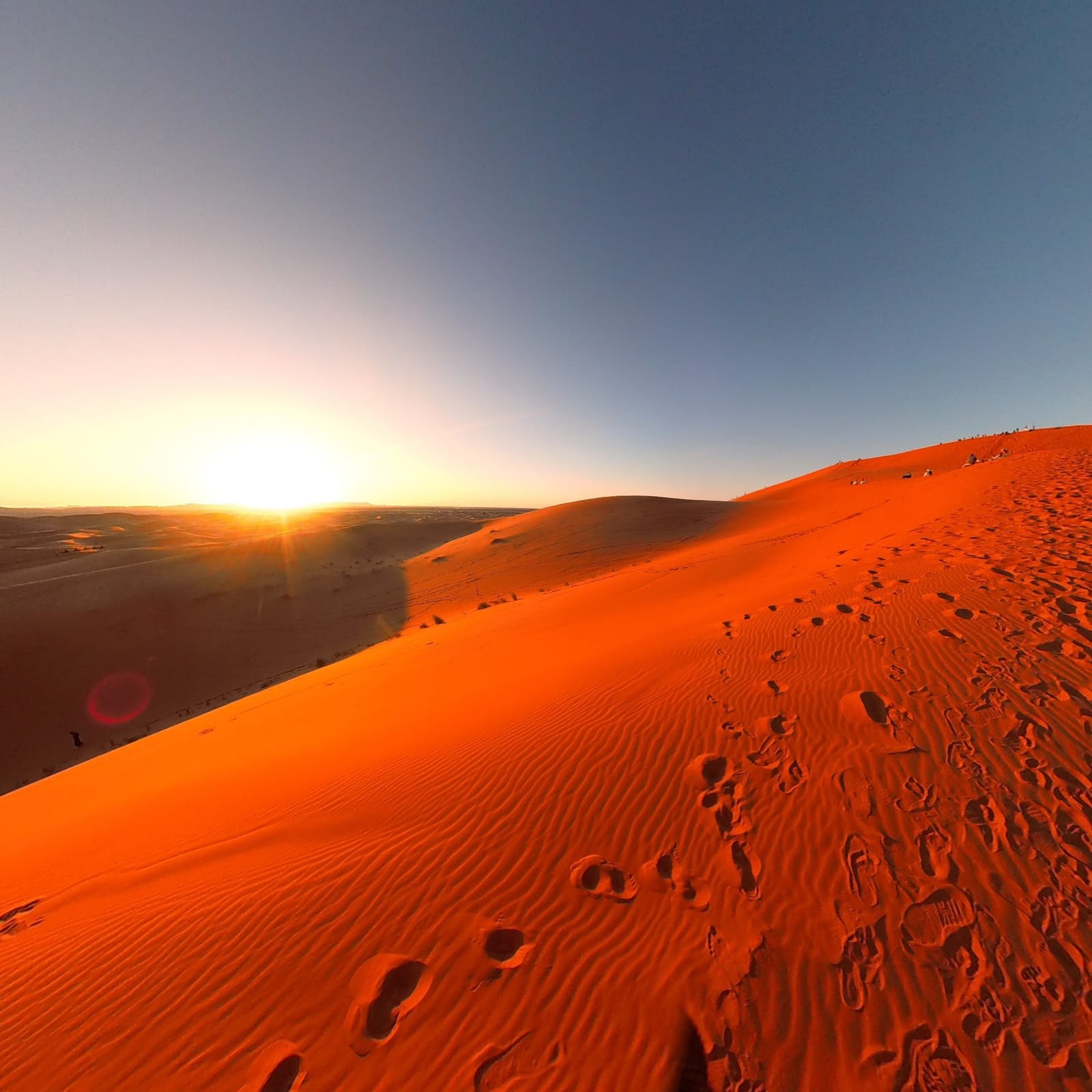
| Merzouga and Erg Chebbi | Golden dunes up to about 150 m and the camel ride to camp | Arrival |
Ifrane: Morocco's Switzerland
Ifrane is a useful short pause for gardens, chalet-style buildings and the stone lion near the centre. It can be a cool-air contrast on a summer route and a snow-affected town in winter. A Fes to Merzouga transfer stop is different from a longer Ifrane nature stay: keep the visit proportionate to daylight and the camp appointment.
The Azrou cedar forest
The Middle Atlas cedar forest near Azrou is a worthwhile pause when it fits the road conditions and time. Barbary macaques are wild animals, not a guaranteed performance; watch from a distance and do not feed or touch them. A safe parking place and a short walk matter more than trying to get close for a photograph.
Midelt and the high plateaus
After the Col du Zad, the road crosses wide plateaus where nomad families still raise sheep. Midelt, at the foot of Jbel Ayachi, is the traditional lunch stop; try Atlas trout or a tagine.
The Ziz Gorges and the Ziz Valley
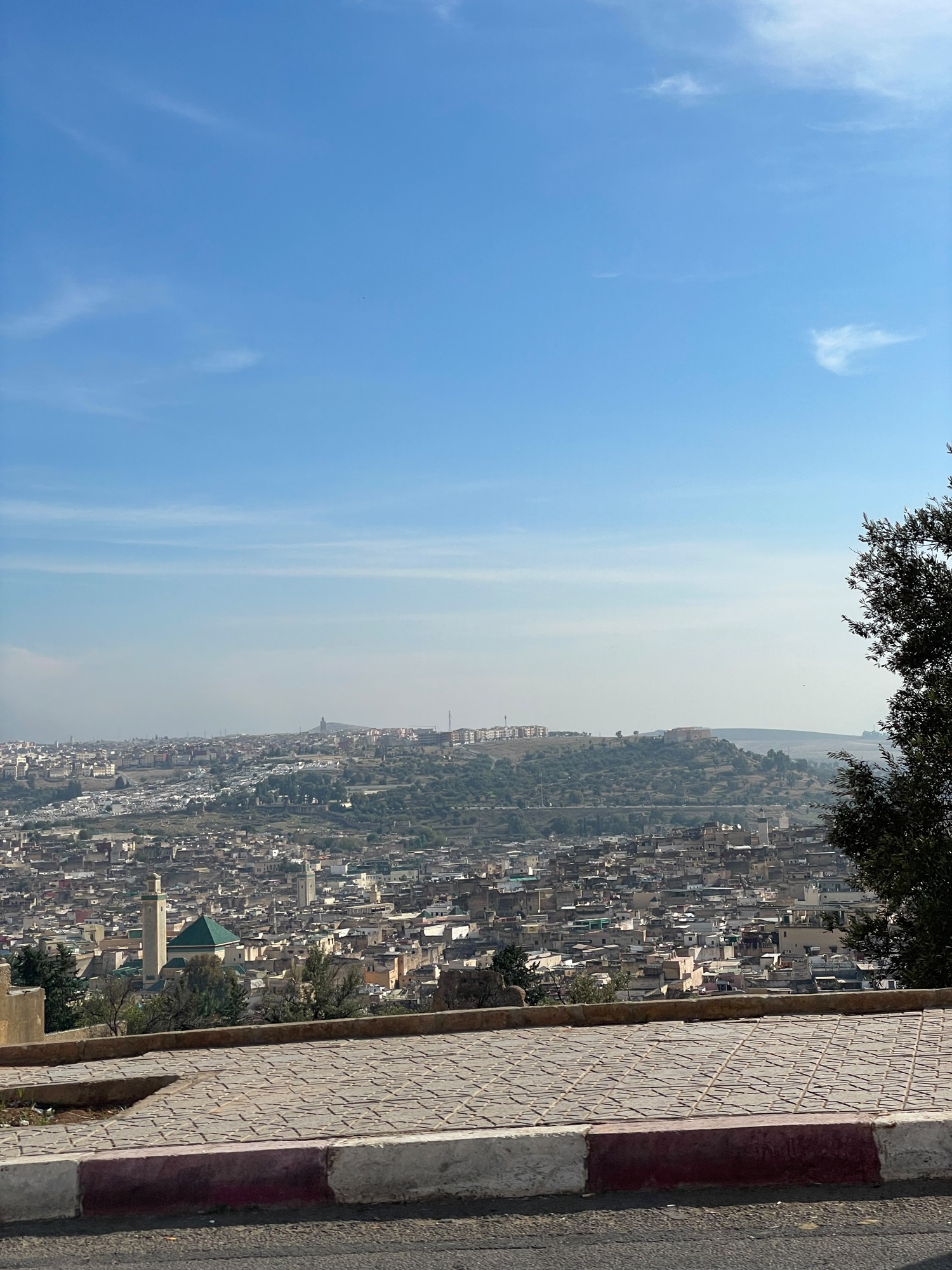
This is the stretch to slow down for. After Rich, the road goes through the Tunnel du Légionnaire, dug by the French Foreign Legion, follows red canyons, and then, south of Errachidia, the Ziz Valley viewpoint looks down on a ribbon of palm groves tens of kilometres long.
Erfoud, Rissani and the last kilometres
Finally, the landscape flattens into open desert. Stop in Erfoud for fossils or in Rissani for the market, then watch the dunes of Erg Chebbi appear on the horizon.
Our must-stops: the Azrou cedar forest, lunch in Midelt and the Ziz Valley viewpoint. Optional when time is short: Immouzzer, Erfoud and Rissani.
Fes to Merzouga: Reach the Camp Before Sunset
The best Fes to Merzouga arrival time is the one your camp confirms for the exact date and transfer. Ask whether it means reception check-in, 4×4 collection or the camel departure, and how early you must be ready. Winter leaves less daylight for sightseeing. If delayed, contact the camp early to discuss the remaining options and any cost; do not ask the driver to recover time by rushing or assume another transfer is automatically available.
When to Drive: Snow, Heat and Daylight
Winter (December-February): snow and ice can affect the Ifrane/Col du Zad approach and disrupt travel for an unpredictable period. Check the route before setting out, keep warm clothing accessible and consider splitting the journey. Merzouga nights can be very cold, so confirm the camp bedding and any heating.
Spring (March-May): a useful Fes to Merzouga window for combining Middle Atlas scenery and the dunes. Blossom and greenery depend on altitude and the season's rain. Later spring can be hotter near Merzouga, and wind can change the desert programme.
Summer (June-August): the Middle Atlas may offer a cooler contrast, but the southern approach and dunes can be intensely hot. Confirm cooling and rest arrangements, carry water and leave time for a transfer scheduled in the cooler hours.
Autumn (September-November): golden light and the date harvest in the Ziz Valley and Erfoud.
Cash, Fuel and a Layer within Reach
Withdraw cash before the remote legs of Fes to Merzouga and refill fuel when convenient in a larger town such as Midelt or Errachidia. Keep enough dirhams for lunch, fuel and excluded camp extras if card payment fails. Download the route and meeting details, and stop only where parking is safe. Carry the layer appropriate to the forecast in the passenger area rather than at the bottom of a suitcase.
How Many Days Do You Need?
| Plan | What it looks like | Our view |
|---|---|---|
| 2 days / 1 night (Fes → Merzouga → Fes) | Drive down, one night in the camp, drive back | Possible, but you spend most of the trip on the road |
| 3 days / 2 nights | Fes → Merzouga (camp), then on to Marrakech via Todra and Dadès, or back to Fes | Best balance for most travellers |
| 4 days / 3 nights | Adds a night in Midelt or the Ziz Valley, or a second desert night | Ideal for families, photographers and slow travellers |
For most people, 3 days and 2 nights is the right choice: you see the Middle Atlas on day 1, sleep in the dunes, and continue to Marrakech without backtracking.
What to Do Around Merzouga
If you can, keep a few hours in Merzouga itself:
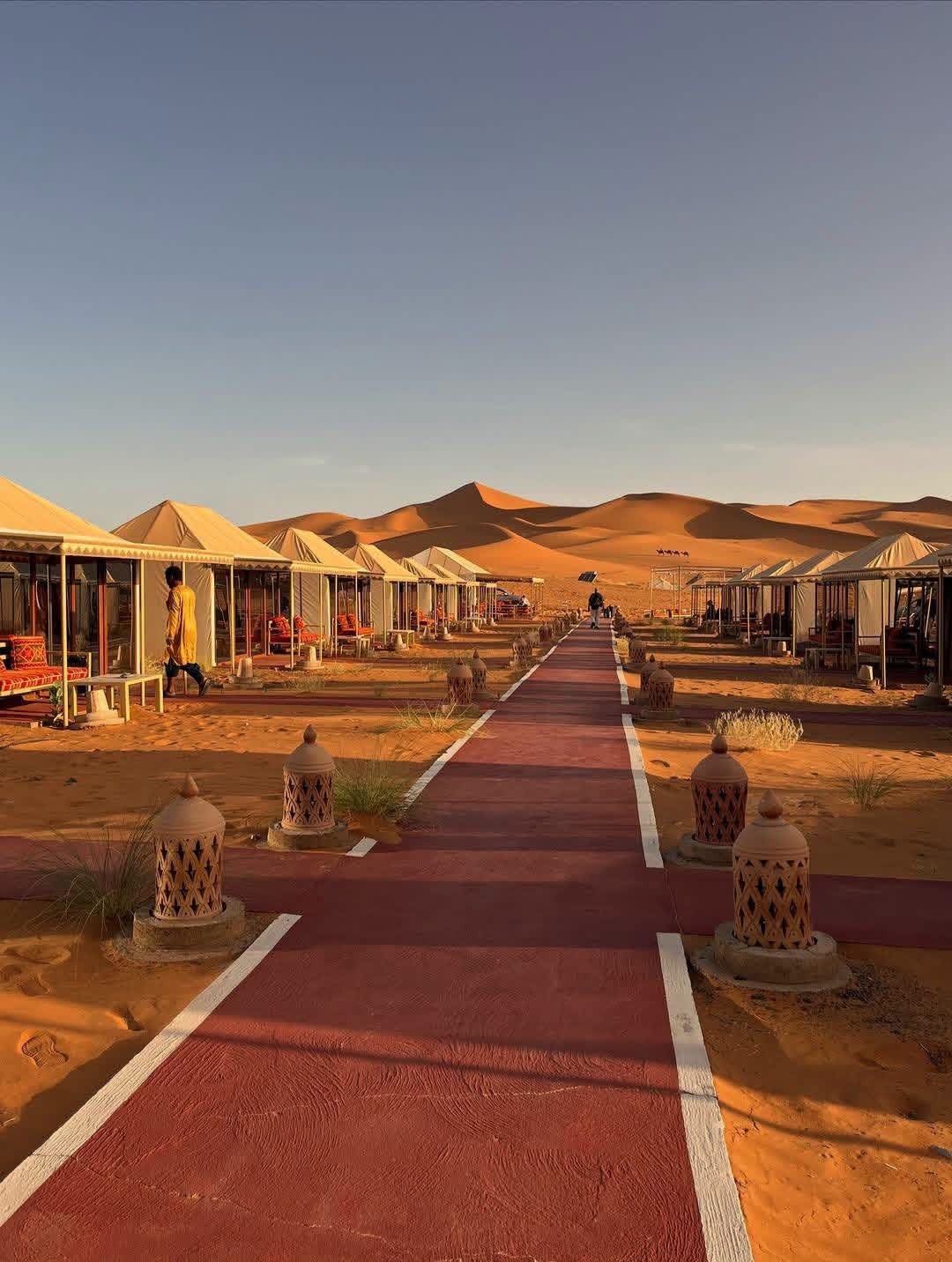
A sunset camel ride into the Erg Chebbi dunes and a night in a Berber camp.
Sunrise from a dune: wake before dawn; it's worth it.
Khamlia: enquire about a Gnaoua music visit, what the explanation or performance includes and the expected payment. A local cultural visit is an arrangement with its hosts, not a stop guaranteed on every arrival afternoon.
Rissani: the old market town of the Tafilalet, with its ksour and a busy souk on Tuesday, Thursday and Sunday.
Sandboarding or a quad ride in the dunes, and a Berber "pizza" (medfouna) for lunch.
Dayet Srji: a seasonal lake area that can look completely different according to rainfall. Do not plan around seeing water or flamingos without recent local confirmation.
For what camp night is really like, read 7 things nobody tells you about a night in Merzouga.
Shared Tour, Private Driver or Self-Drive?
Shared tour: the most affordable and social option, such as the 3-day shared desert tour from Fes to Marrakech.
Private tour: your own vehicle, timing and stops, such as the 3-day private Fes to Marrakech luxury desert tour or the 4-day private Sahara tour from Fes to Marrakech.
Self-drive: the main Fes to Merzouga approach uses paved roads, but the final camp-access leg varies. Get the exact vehicle meeting point and parking arrangement from the camp. Do not follow a map pin onto sand in a normal rental car; confirm any camel or appropriate 4×4 transfer and where the main luggage stays.
Continue to Marrakech or Return North
You can return to Fes the same way, or continue to Marrakech via the Todra Gorge, the Dadès Valley and Aït Benhaddou, a UNESCO World Heritage site. Exploring Fes first? Set aside a separate medina day before the long desert drive. Student groups should confirm rooming, luggage space and who is responsible for shared payments. Read our Fes to Marrakech in 3 days route guide for the full itinerary.
Fes to Merzouga: Build the Day Backwards from Camp
Start with the actual camp meeting time, then reserve the road day. For example, a 16:30 appointment minus a ten-hour travel-and-stop allowance points to 06:30. Adding a separate half-hour margin moves that example departure to 06:00. Those times illustrate the calculation; they are not a universal Fes to Merzouga pickup schedule or a prediction of sunset.
| Part of the example day | What it covers |
|---|---|
| Driving | The main road journey, affected by weather, traffic and the exact camp approach |
| Lunch and essential breaks | Real time out of the vehicle, not counted as uninterrupted driving |
| Selected sightseeing | A short forest/Ifrane pause and the Ziz viewpoint, rather than every optional showroom |
| Arrival margin | Time for the meeting point, bags and the booked camp transfer |
A Fes to Merzouga day with several long visits is a different itinerary from a transfer with photo stops. Choose the core pauses before leaving: the forest, a proper lunch and the Ziz Valley are a useful starting trio. Erfoud fossils or the Rissani market can wait for a local day if they would put the camp arrival under pressure.
When a Two-Day Fes to Merzouga Approach Makes Sense
Split the approach if you want more time in the Middle Atlas, dislike a long single road day, or need greater flexibility around winter conditions. An overnight near Midelt creates a different break from one near the Ziz Valley: the first leaves more southern road for day 2, while the second carries you farther on day 1. Name the overnight town in the proposal so that the balance is visible.
For photographers, a split Fes to Merzouga route also gives a chance to use morning or afternoon light outside a quick roadside stop. It does not guarantee particular weather, wildlife or a flowing lake. Put the landscape priorities ahead of a long list of commercial visits, and leave room to stop where access and parking are suitable.
After the Dunes: Fes Return or Marrakech Crossing?
A three-day return to Fes can use a second Merzouga-area night before the drive north. A three-day crossing instead continues toward Todra and Dadès, then Aït Benhaddou and Marrakech. Both can begin with Fes to Merzouga, but they do not give you the same local desert time. Choose the ending before booking the camp nights.
If conditions delay the approach, call the camp before the meeting time. The useful question is which transfer or activity still operates and what changes in the booking. Keep the driver's road pace separate from the wish to see sunset: reducing optional stops or changing an activity is a better adjustment than trying to recover the schedule by rushing.
Plan Your Fes to Merzouga Route
Tell us when you land in Fes and where you want to finish. We can suggest the departure time for the season, the lunch stop, the camp level and the number of nights, and whether to end in Marrakech or back in Fes. Arriving by plane? Start with a Fes airport transfer, or ask for a custom tour.
FAQ: Fes to Merzouga
How far is Merzouga from Fes?
About 470 km, which takes 7-8 hours of driving, or 9-10 hours with stops.
Can you drive from Fes to Merzouga in one day?
Yes, but this means a one-way transfer day, not a return day trip. The number of stops depends on daylight, road conditions and your camp's arrival requirements.
What are the best stops between Fes and Merzouga?
Ifrane, the Azrou cedar forest, Midelt, the Ziz Gorges and the Ziz Valley viewpoint.
Is it better to start a desert tour from Fes or Marrakech?
Fes is closer to Merzouga (7-8 hours versus 9-10 hours), so the drive to the dunes is shorter.
Is the road from Fes to Merzouga safe to drive?
The main road (N13) is paved and usually in good condition. The main risks are snow and ice around Ifrane and the Col du Zad in winter, livestock and cyclists in villages, and driving after dark. Check the weather the day before, and plan to arrive before sunset.
How many days do I need for Fes to Merzouga?
Three days and two nights is ideal. Day 1: drive from Fes to Merzouga, camel ride at sunset and night 1 in the desert camp. Day 2: sunrise, then the Todra Gorge and night 2 in the Dadès Valley. Day 3: Aït Benhaddou and arrival in Marrakech in the evening. If you return to Fes instead, spend day 2 around Merzouga (Khamlia, Rissani) and sleep a second night there.
Is there public transport from Fes to Merzouga?
Check the dated CTM and Supratours networks for the actual destination: a service to Rissani is not the same as a stop at your Merzouga accommodation. Confirm the final local transfer and camp arrival time before buying an overnight coach. Public transport does not automatically include the camel ride or camp.
What is there to do in Merzouga besides the camel ride?
Sunrise on the dunes, Gnaoua music in Khamlia, the Rissani souk, sandboarding and quad rides.