

- 84 Views
- 6 Min Read
- (0) Comment
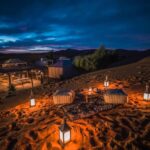
Zero wifi. Zero light pollution. One night you won’t forget.
Almost every desert Morocco tour ends up in the same place: Merzouga. And honestly, that’s for a good reason.
But here’s the thing. Most tour pages show you the same photo — a camel, a dune, a perfect sunset. What they don’t tell you is what actually happens once the sun goes down.
So let’s fix that. Below are seven things you’ll wish you knew before your first night in Merzouga. Some are practical. Some are surprising. All of them are worth knowing before you book.
1. The Camel Trek Is the Best Hour of the Whole Trip
Expect: to understand why people book this tour in the first place.
On most 3-day desert tour itineraries, you reach the edge of the dunes in the late afternoon. From there, you leave your big suitcase at the auberge and pack a small overnight bag instead.
Then you climb onto a camel.
The trek takes about an hour, and it’s timed for sunset on purpose. As you ride, the sand keeps changing color. Gold first, then amber, then a deep, dusty red. Meanwhile, the only sounds are footsteps and wind.
By the time you reach camp, you’ll get it. This is the part people remember.
2. It Gets Genuinely Cold at Night
Expect: a 30°C swing between noon and 5 AM.
This one catches almost everyone off guard.
The Sahara is hot during the day. But at night? It drops fast. In spring and autumn, temperatures usually fall to around 10–15°C. In winter, they can get close to 0°C, especially just before sunrise.
So pack a warm layer. Camps do provide blankets, and they’re usually thick enough. Still, having your own jacket makes the evening around the fire much more enjoyable.
Quick tip: bring layers instead of one heavy coat. You’ll want to peel them off by the fire, then put them back on at bedtime.
3. You’ll Sleep in a Real Bed, Not on the Sand
Expect: more comfort than the word “camping” suggests.
A lot of travelers picture a sleeping bag on the ground. In reality, it’s not like that at all.
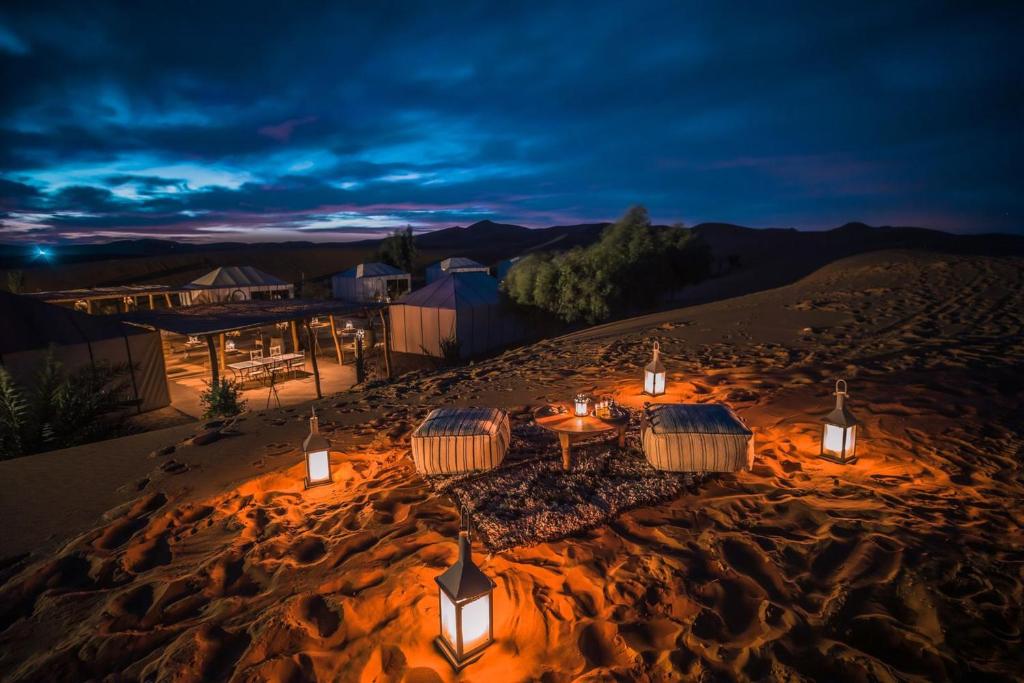
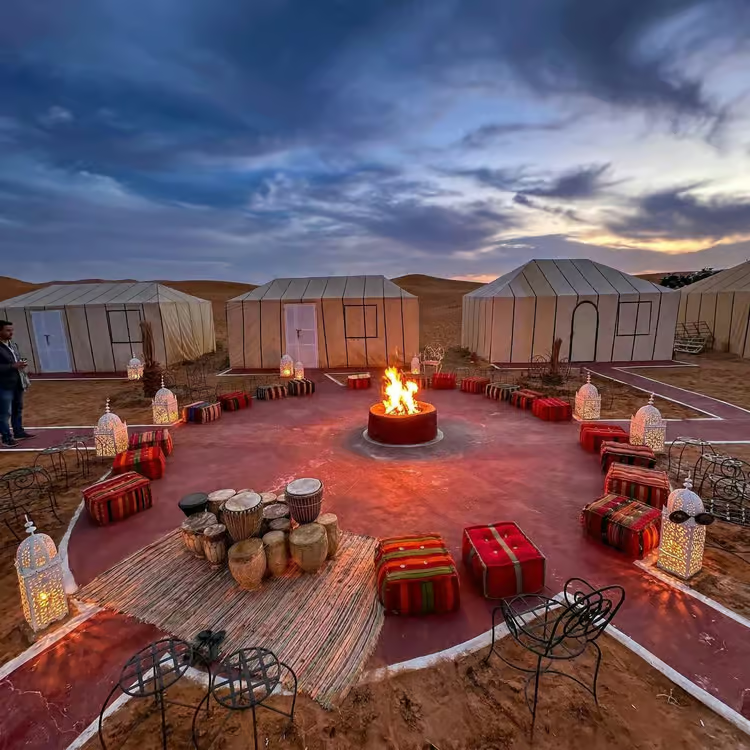
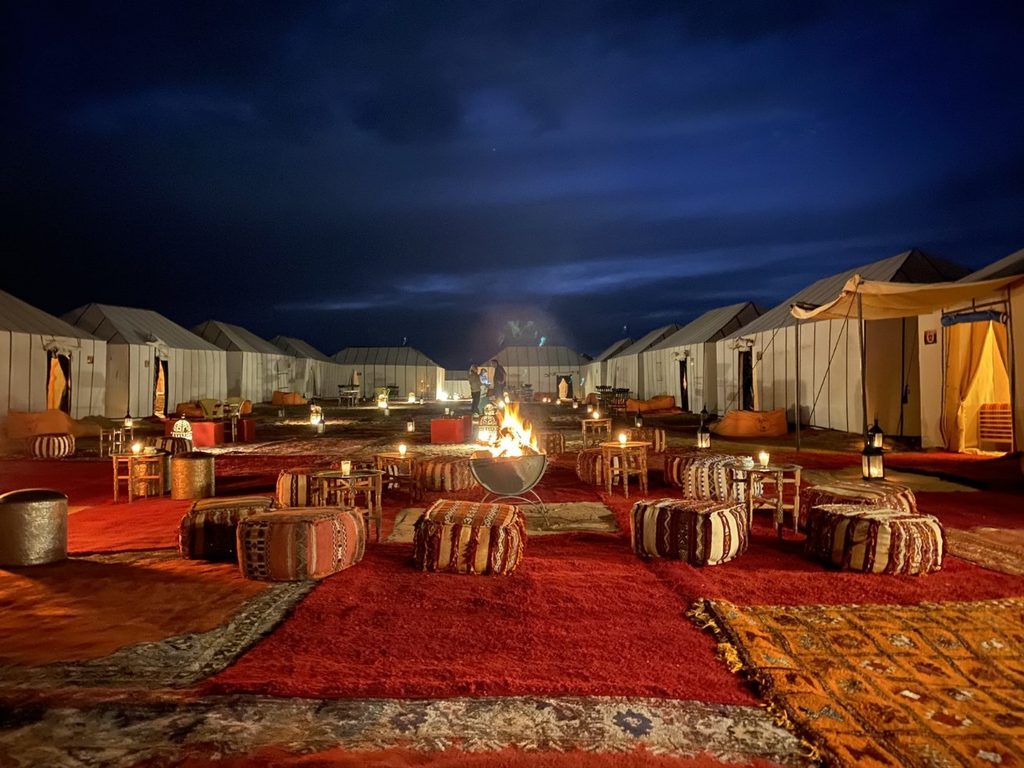
Standard camps use traditional Berber tents, arranged in a circle around a central fire and dining area. Inside, you’ll find an actual bed with blankets. Basic, yes. But comfortable.
And if you’d rather not share facilities, most operators offer a luxury camp upgrade. That gets you a private tent with proper furniture and an en-suite bathroom. On a group desert tour, this usually costs around €30 extra per person — a small price if comfort matters to you.
4. There’s No Wifi — and That’s the Point
Expect: to be genuinely offline for about 14 hours.
Don’t count on wifi. Don’t count on much electricity either.
Most camps run a generator for a few hours in the evening, mainly for lighting. After that, it goes quiet. Your phone will probably show no signal at all.
At first, this feels strange. Then, after about twenty minutes, it stops feeling strange and starts feeling good. No notifications. No scrolling. Just the fire, the conversation, and the sky.
Honestly, it might be the best part of the whole desert Morocco tour.
5. Dinner Is Simple — and Better Than It Should Be
Expect: tagine, fresh bread, and endless mint tea.
Dinner is served in a shared tent, or outside if the weather allows. Expect a traditional Moroccan meal: a hearty tagine, warm bread, and seasonal vegetables. Then mint tea afterward, always.
Portions are generous. And somehow, eating a simple meal in the middle of the Sahara makes it taste far better than it probably would anywhere else.
After dinner, the camp staff usually bring out drums. It’s not a staged performance — just Berber guides playing music that’s been passed down for generations. Most guests end up joining in, badly but happily.
If you’re on a group desert tour and traveling solo, this is where the evening really opens up. By the end of it, you’ll know everyone’s name.
6. The Sky Is Genuinely Different Out There
Expect: the Milky Way, visible with your naked eye.
This is the part people struggle to describe.
Once the fire dies down and the generator switches off, the darkness is almost total. No streetlights. No buildings. No light pollution of any kind.
Look up, and you’ll see the Milky Way stretched right across the sky. Shooting stars aren’t rare either. Many guests simply lie back on the sand and watch for a while before heading to bed.
If you like photography, bring a phone tripod or just rest your phone on a bag. Even basic cameras capture surprisingly good shots out here with a few seconds of exposure.
7. The 5:30 AM Wake-Up Is Worth It
Expect: to be annoyed for ten minutes, then grateful all day.
Someone will wake you before dawn. It’s early, and you’ll probably resent it briefly.
Go anyway.
You’ll walk or ride back up a nearby dune in the dark. Then, over about twenty minutes, the sky shifts from black to purple to burning orange. The temperature climbs. The whole desert seems to wake up with you.
After that, it’s breakfast at camp, a quick shower, and back on the road. On a standard 3-day desert tour, day three is the long drive home to Marrakech — roughly 8 to 9 hours with stops.
Long? Yes. But by then, you’ll have something worth the drive.
So, How Do You Actually Book This?
Most travelers experience their night in Merzouga as part of a 3-day desert tour from Marrakech or Fes. The route is well established, run daily by local operators, and it works.
You’ve got two main options.
A group desert tour puts you in a shared minibus with other travelers. It starts from around €89 per person, which makes it the most affordable way to reach the dunes. It’s also the more social choice, which many solo travelers actually prefer.
A private tour gives you your own 4×4 and driver-guide, plus a flexible schedule. Prices typically start around €350 per person, depending on group size and season. For couples and families, this is usually the better fit.
Either way, you end up in the same place: on a dune at sunrise, watching the Sahara turn gold.
Frequently Asked Questions
How cold does it get at night in Merzouga?
Usually 10–15°C in spring and autumn. In winter, it can approach 0°C before dawn. Camps provide blankets, but bring a warm layer.
Is there wifi or electricity at the desert camp?
Rarely. Most camps use a generator for a few hours of evening lighting only. Plan to be offline overnight.
Can I shower at the camp?
Standard camps have shared facilities, often without hot water. Luxury camp upgrades usually include a private en-suite bathroom.
Is one night in Merzouga enough?
For most travelers, yes. One night covers the full experience — sunset camel trek, dinner, stargazing, and sunrise.
Is a group desert tour worth it, or should I book private?
Group tours are cheaper and more social. Private tours cost more but give you flexibility and your own vehicle. Both include the same desert camp experience.
Ready for Your Own Night in the Dunes?
No article really captures what it feels like to sit under that many stars. At some point, you just have to go.
If you’re planning it, start with the 3-day desert tour from Marrakech, which includes the Merzouga night plus the Atlas Mountains and Aït Ben Haddou along the way.
Traveling on a budget? The group desert tour from Marrakech covers the same route for less.
Or, if you’d rather finish somewhere new, the Marrakech to Fes desert tour takes you across Morocco one-way instead of looping back.

Leave a comment:
You must be logged in to post a comment.